
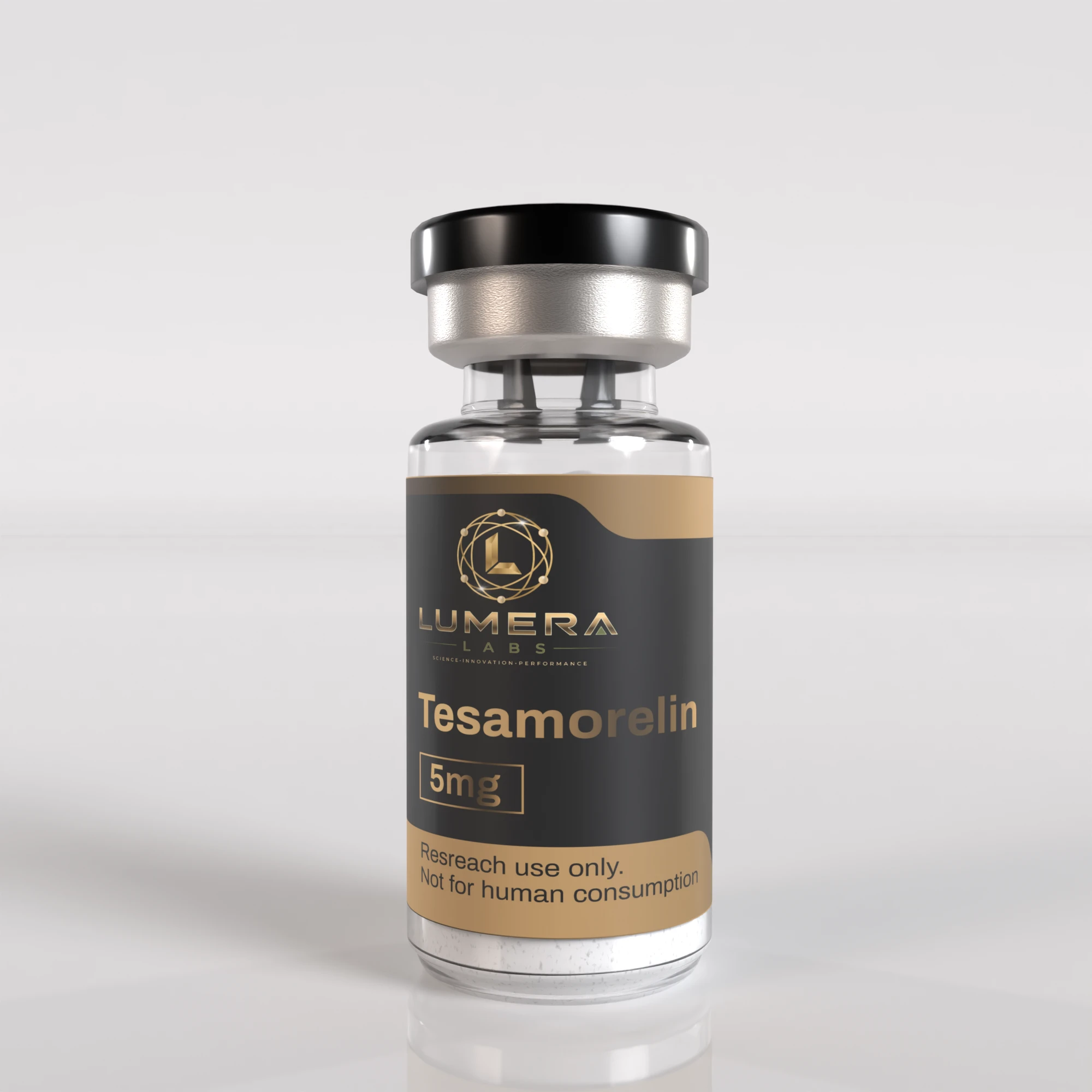

Tesamorelin
(Research Use Only)
Tesamorelin is a synthetic analogue of ghrelin, an orexigenic hormone primarily secreted by the stomach that plays a critical role in appetite regulation and growth hormone secretion. In research settings, tesamorelin has been extensively studied for its ability to modulate various physiological processes related to aging, muscle mass, and fat metabolism.
Research Context
Tesamorelin’s unique mechanism of action makes it a valuable tool in cellular biology and pharmacology studies. It can be used to investigate the effects of growth hormone on tissue repair, muscle protein synthesis, and metabolic processes, providing insights into potential therapeutic applications without direct clinical implications.
Research Overview
Tesamorelin has been extensively utilized in academic research for its ability to stimulate growth hormone secretion. This peptide is particularly useful in studies aimed at understanding the underlying mechanisms of aging-related changes in muscle and adipose tissue, as well as in exploring potential interventions to maintain or improve these tissues.
Key Research Focus Areas
- Tissue Repair and Regeneration: Studies have shown that tesamorelin can enhance the repair processes of damaged tissues by promoting cell proliferation and reducing inflammation, making it a valuable reagent in tissue engineering research.
- Muscle Protein Synthesis: Research has indicated that tesamorelin may play a role in increasing muscle protein synthesis through growth hormone-dependent pathways. This makes it an important tool for investigating muscle atrophy and recovery.
- Fat Metabolism: Investigations into the effects of tesamorelin on fat metabolism have revealed its potential to alter lipid profiles, making it relevant for studies examining obesity and metabolic disorders.
Final Compliance Disclaimer
This product is intended for research purposes only. Tesamorelin should not be used for human or animal consumption. It is provided strictly as a reagent for scientific investigation in controlled laboratory settings.
| Size | 5MG, 10MG |
|---|
Reviews
There are no reviews yet.